You asked ChatGPT for a business like yours, and it happily named the lot down the road. Not you. Even though you know you do the better job.
It’s one of the questions we hear most at Suki Marketing: why does ChatGPT recommend my competitors and not me? Or its close cousin: why isn’t my business showing up in ChatGPT at all?
ChatGPT recommends your competitors when it finds more clear, consistent and independent evidence that they fit the question. That usually means they’re on more “best of” lists, review sites and directories, describe what they do in plainer language, and are easy for AI crawlers (the bots that read web pages) to read. It doesn’t mean they’re better at the job.
Being known by AI isn’t the same as being recommended
AI tools can usually describe a business when you ask about it by name, but that doesn’t mean they’ll suggest it when someone asks for a recommendation. In a Q2 2026 study by the agency Victorious, 96% of the brands tested were described accurately when named, yet 89% never appeared in buying questions.
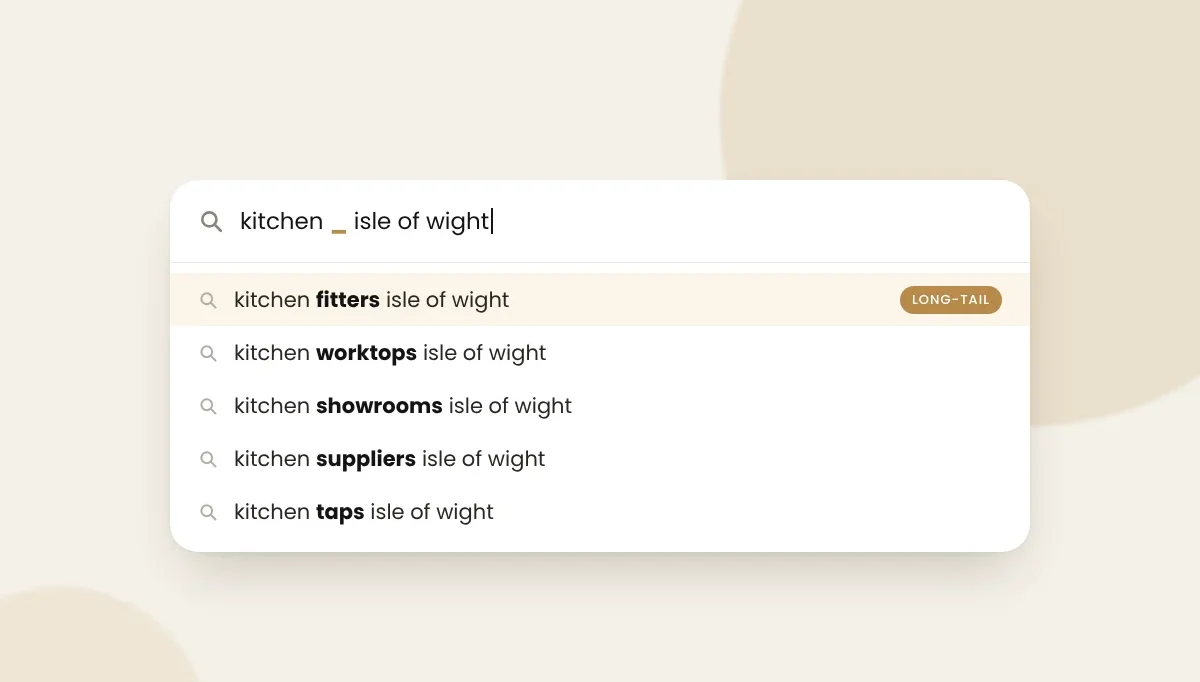
Those are two very different jobs. “What does [your business] do?” hands the AI your name. “Who’s the best kitchen fitter near me?” asks it to pick a handful of names on its own.
The same Victorious study found the strongest links with being mentioned were the number of websites linking to a brand and how often other websites mentioned it. That’s a correlation, not proof of cause, but it points the same way as other research.
A June 2026 analysis of around 102,000 AI answers by Ranqo found that only 2.9% of the sources cited pointed to the brand’s own website. Ranqo sells AI tracking, so take the exact numbers with a pinch of salt. The pattern is still clear: AI tools build their shortlists mostly from what other people publish about you.
How does ChatGPT decide which businesses to recommend?
OpenAI doesn’t publish a formula. ChatGPT answers from two places: what it learned during training, and what it finds when it searches the web live. For recommendations, especially local ones, the live search does a lot of the work, along with the exact wording of the question and where the person asking is based.
What it already knows versus what it looks up live
Training knowledge is usually enough for ChatGPT to describe a well-known brand. A newer or smaller business may barely feature in it at all.
When ChatGPT searches the web, it reads websites, directories, review sites and comparison articles, then pulls an answer together. If your website blocks OpenAI’s search crawler, or there’s very little written about you elsewhere, there’s not much for it to find.
Why the exact question changes the answer
AI answers aren’t a fixed league table. They shift with the wording, the location, and whether the tool searched the web for that answer.
The person asking matters too. In a logged-out or incognito ChatGPT chat there’s no memory, so it knows nothing about you. On your own account it has your history and memory, probably knows you run the business, and you probably word your questions differently from your real customers.
In our experience, any agency guaranteeing that you’ll always show up in AI results is telling porkies. Nobody can see every user’s history and memory, so nobody can promise what ChatGPT will say to them.
Why does ChatGPT recommend my competitors? The six usual reasons
When a rival keeps getting recommended, it’s usually down to one or more of six things: they’re on the lists AI reads, more people talk about them, their website is clearer, their details match everywhere, AI can read their site properly, or they’re simply better known. Most of these can be fixed. One just takes time.
1. They’re on the lists AI reads
“Best of” roundups, local directories and comparison pages are one of the easiest ways into an AI answer. In Ranqo’s 2026 analysis, ranked lists were the single most-cited type of page, at about 21% of all citations.
If a local blog has written “The best kitchen showrooms on the Isle of Wight” and your competitor is on it, that one page can put them in front of ChatGPT again and again. Look at which lists, directories and trade associations your competitors appear on, and ask to be included where it’s genuinely relevant.
2. Other people talk about them more
AI tools lean on what independent sources say about a business. That means reviews, local press, trade bodies and forum threads.
For UK businesses, the review sites that matter are the ones your customers actually use: Google, Trustpilot, and trade platforms such as Checkatrade or Houzz. There’s a reason Google reviews carry so much weight, and it applies to AI answers as well as Maps.
This is slow, steady work, and it’s the core of building the mentions and reviews AI tools lean on. Never buy reviews or fake mentions. It breaks platform rules, and when it goes wrong it goes very wrong.
3. Their website says what they do in plain English
AI tools need to match your business to a question. Vague marketing copy makes that hard.
| Too vague for AI | Clear enough to recommend |
|---|---|
| “We create bespoke, design-led living spaces.” | “We design and fit kitchens in Newport and across the Isle of Wight, with a free home design visit.” |
| “Quality flooring solutions for discerning clients.” | “We supply and fit carpet, luxury vinyl tiles and wood flooring for homes on the Isle of Wight.” |
Sometimes there’s simply nothing there to match. We worked with a property management company that wanted to expand across the UK but wasn’t showing up in AI answers at all. They had a brand-new website after a rebrand, no SEO strategy and next to no content. AI tools had almost nothing to go on, so they defaulted to the competitors that did.
4. Their business details match everywhere
If your name, address, phone number and services differ between your website, Google Business Profile, directories and social media, it’s harder for any system to be sure it’s looking at the same business.
Google’s own guidance for AI features says to keep your Business Profile information up to date. If yours hasn’t had attention in a while, a properly set up Google Business Profile is one of the quickest wins on this list.
5. AI can actually read their website
ChatGPT uses a crawler called OAI-SearchBot to find pages for its search answers. OpenAI says that if you block it, your content won’t be used in ChatGPT search summaries and snippets.
OpenAI also runs a separate crawler, GPTBot, which is for training. Blocking GPTBot doesn’t stop you appearing in ChatGPT search. Blocking OAI-SearchBot does.
Blocks don’t only come from your robots.txt file (the file that tells crawlers what they can visit). Security plugins, firewalls and some hosting setups block bots too. Prices, service lists and opening hours locked inside images, PDFs or sliders can also be hard for crawlers to read. If you suspect crawler and indexing problems, they’re worth ruling out first.
6. Sometimes they’re just better known
This is the one nobody likes to say out loud. If your competitor has traded on the Isle of Wight for 20 years, been in the local paper a dozen times and collected hundreds of reviews, AI tools have far more to go on.
That isn’t fixed with a trick or a special file. It’s fixed by building the same kind of evidence over time, and by being the clearest, most useful answer for the questions where you really are the better fit.
Why are competitors in Google’s AI Overviews when I rank higher?
AI Overviews are built on Google’s normal Search systems, so rankings still matter. But Google also runs several related searches behind the scenes, called query fan-out, and can cite pages from any of them. A competitor who answers the follow-up questions around your service can be cited even when you outrank them for the main search.
Google says there are no extra technical requirements or special markup needed to appear in AI Overviews. A page needs to be indexed and eligible to show in normal search results with a snippet. After that, it comes down to having the clearest, most useful answer to the questions people actually ask.
We’ve seen this first-hand. Our client LH Watch Trade, a luxury watch dealer in Portsmouth, now appears in Google’s AI Overviews for Rolex questions about waterproofing, authentication and comparing models. That came from expert articles that answer buyers’ detailed questions directly, with clear headings and structured data, alongside strong local SEO.
Can you pay to get recommended by ChatGPT?
You can’t pay to be recommended in ChatGPT’s answers. OpenAI now shows ads to free and Go users in the UK, but it says they’re labelled, kept separate and don’t influence the answer. Being recommended still comes down to what the web says about your business.
So if someone offers to “get you into ChatGPT” for a fee, ask exactly what they’ll do. A labelled ad is one thing. A guaranteed recommendation doesn’t exist.
Check where you stand in 10 minutes
You don’t need a paid tool to get a rough picture. Run these checks today, then repeat them with the same questions every month.
- Open a logged-out or incognito window. Use ChatGPT, Gemini and Perplexity. This removes your own history and memory, so you see something closer to what a new customer sees.
- Ask about your business by name. For example, “What does [your business] in [your town] do?” Check whether the description is accurate.
- Ask the question a customer would ask. For example, “Who’s the best flooring company on the Isle of Wight?” Write down who gets named, and whether you do.
- Click the links in the answer, if there are any. Note which lists, directories and review sites your competitors appear on and you don’t. If the answer shows no links, don’t ask the AI to list its sources afterwards, because it may make some up.
- Check your robots.txt. Visit yourwebsite.co.uk/robots.txt and look for OAI-SearchBot. If it’s blocked, or you’re not sure whether a firewall or security plugin is blocking it, ask your developer or host.
- Look for ChatGPT visits in Google Analytics 4. OpenAI says ChatGPT adds utm_source=chatgpt.com to the links it sends people through, so you can spot those visits in your traffic reports and see whether they turn into enquiries. A mention only really counts if it brings you customers.
- Check Search Console’s AI report, if you have it. Google started rolling out generative AI performance reports in June 2026, showing impressions in AI Overviews and AI Mode. Not every site has them yet, but if yours does, checking your AI impressions in Search Console each month shows whether things are moving.
What to fix first
Start with what’s quick and free: make sure AI crawlers can reach your site, tidy your Google Business Profile and directory listings, and rewrite your main service page so it says plainly what you do and where. Then work on the slower stuff: reviews, mentions and getting onto the lists your customers read.
- Unblock the crawlers. Allow OAI-SearchBot in robots.txt and check nothing else is blocking it.
- Match your details everywhere. Same name, address, phone number and services on your website, Business Profile and directories.
- Rewrite your key pages in plain English. Put the answer first. Making your pages easier for AI tools to quote is often the fastest change you can make yourself.
- Ask happy customers for reviews, on the sites your customers actually use.
- Get onto the right lists. Local roundups, trade directories and associations where your competitors already appear.
If ChatGPT has told you to rush out and buy an expensive AI package before doing any of this, it’s right to be cautious. Do the basics first.
How long does it take to start being recommended?
Some fixes show up within a few weeks, such as unblocking AI crawlers or rewriting a key page so it answers questions directly. Building reviews, mentions and listings on other sites takes longer, and most businesses see steady progress over three to six months. Nobody can promise you’ll be recommended, and anyone who does is guessing.
Let us keep an eye on it for you
The checks above are worth doing yourself. The tricky part is doing them every month, across several AI tools, with the same questions, and knowing what to change when the answers shift.
That’s where we come in. As part of our AI SEO work, we track how often AI tools recommend you, side by side with your Google rankings, traffic and enquiries. You’ll deal directly with the people doing the work, there’s no lock-in, and we’ll always tell you straight if something isn’t working.
If you’d like a chat about where you stand, book a free 30-minute call. No hard sell, no jargon.