
Another month, another SEO invoice. And if you’re honest, you’re not completely sure what it’s buying you.
You’re not alone, and it’s a fair thing to want to know. You also don’t need to be an SEO expert to find out.
The short answer to “how do I know if my SEO is working?” You know it’s working when more of the right people are finding your business on Google, more of them are getting in touch, and you can see exactly what work has been done to make that happen. Rankings on their own aren’t proof. Enquiries, calls and sales are.
The three-question test for your SEO
Three questions get you most of the way to knowing whether your SEO is working. Ask them every month:
- Are more of the right people finding you? Not just more people, but people searching for what you actually sell, in the places you actually serve.
- Are more of them getting in touch? Calls, form fills, bookings and sales.
- Can you see what was done? Specific pages improved, problems fixed and content published, with links you can click.
Three yeses means your SEO is working. A clear yes to the third alone may just mean it’s early days. If nobody can answer the third, worry.
Five signs your SEO is working
When SEO (search engine optimisation) is working, five things usually improve over time. They rarely all move at once, and that’s normal.
1. More people find you on Google
Google Search Console, Google’s free tool for website owners, shows two numbers worth knowing. Impressions are how many times your site appeared in search results. Clicks are how many times someone clicked through to it (Google Search Console Help).
Impressions usually rise first. Clicks follow.
2. You show up for the searches that bring customers
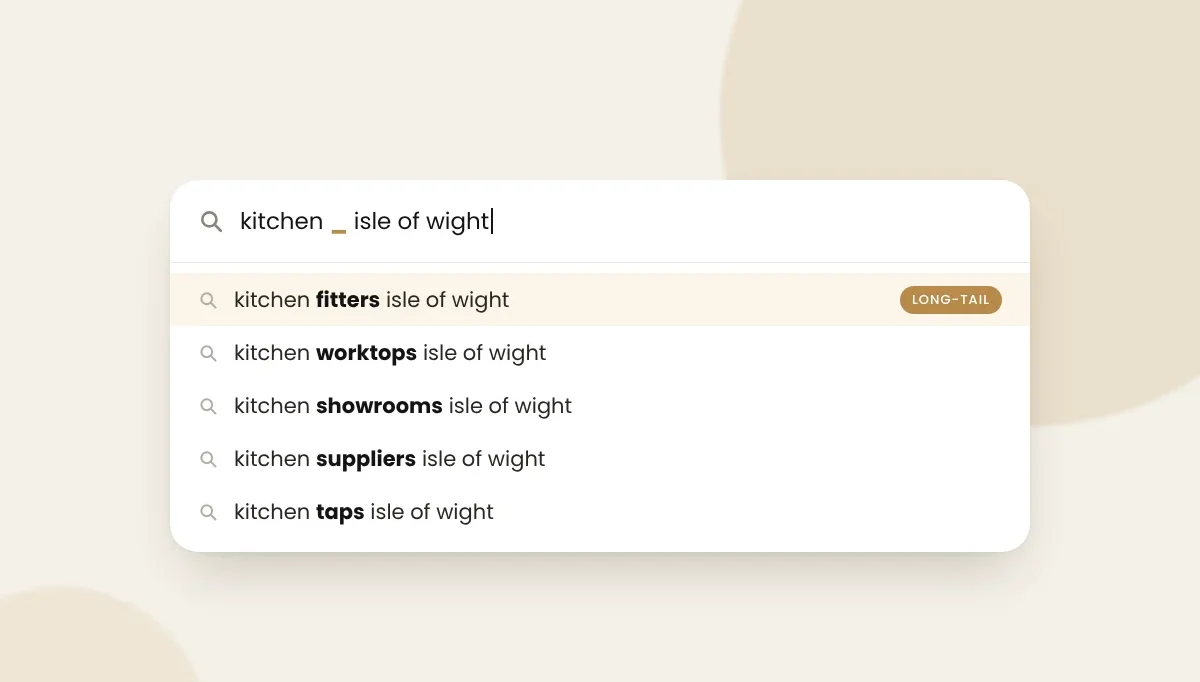
Ranking first for a phrase nobody searches for won’t pay the bills. A kitchen showroom in Portsmouth wants to appear for “kitchen showroom Portsmouth”, not a product name only its staff would type.
3. More enquiries, calls and sales come from Google
This is the one that matters most. Rankings are nice. Enquiries keep the lights on.
Tracking where your enquiries come from lets you tell Google enquiries apart from the rest.
4. You’re easier to find locally
If you serve customers in a particular area, keep an eye on your Google Business Profile. More calls, direction requests and website visits from your listing are a strong sign. A properly set-up Google Business Profile does a lot of the heavy lifting here.
5. AI tools start to mention you
More people now ask ChatGPT, Gemini or Google’s AI Overviews for recommendations. If those tools start naming your business for the right questions, your reputation online is growing. If they name competitors instead, there are usually fixable reasons why ChatGPT recommends your competitors over you.
How long should SEO take before you judge it?
In our experience, most businesses see meaningful improvement within three to six months, and the business return is best judged over six to twelve. That doesn’t mean waiting quietly and hoping. From the very first month, you should see evidence of work and a clear plan.
| When | What you should see |
|---|---|
| First month | An audit, a plan, agreed priorities and the first fixes |
| Months 2 to 3 | Pages improved, content published, impressions starting to rise |
| Months 3 to 6 | Clearer trends in clicks and positions for the searches that matter |
| Months 6 to 12 | More enquiries and sales you can trace back to search |
Competitive industries and brand-new websites take longer. Google doesn’t publish a timeline either. Its advice on hiring an SEO is to ask what results they expect, in what timeframe, and how they’ll measure success (Google Search Central).
Budget plays into this too, because what SEO costs and how long it takes to pay off depends on your market and how strong the competition is.
Check if your SEO is working in 15 minutes
The quickest way to answer “how do I know if my SEO is working?” yourself is with two free Google tools. Search Console shows how people find you, and Google Analytics shows what they do once they arrive. If you don’t have access to either, ask your agency for it today.
In Google Search Console
- Open the Performance report.
- Set the date range to the last three months and compare it with the same period last year. This allows for seasonal ups and downs.
- Check clicks and impressions. You’re looking for an upward trend.
- Open the Queries tab and scan the search terms. They should sound like your customers.
- Open the Pages tab to see which pages are pulling their weight.
In Google Analytics 4 (GA4)
- Go to Reports, then Acquisition, then Traffic acquisition (Google Analytics Help).
- Find the Organic Search row. Those are visitors from unpaid Google results (and other search engines).
- Check whether those visitors complete the actions you care about, such as enquiries, bookings or purchases. This only works if tracking has been set up for them, so ask if you’re not sure.
One thing to bear in mind: if your website asks visitors for cookie consent and some say no, GA4 may not record all of their visits. Treat GA4 figures as a minimum. Search Console isn’t affected, because Google counts those clicks on its side.
Plenty of SEO basics are things you can do yourself, too, if you want to go further than a quick check.
What should an SEO report include?
A good monthly SEO report shows you what changed, why it matters to your business, what work was done and what happens next. You should be able to read it in ten minutes and understand it without a glossary. If it’s mostly ranking charts with no mention of enquiries, it isn’t really telling you whether your SEO is working.
It should cover five things:
- A plain-English summary: how the month went, what improved, what didn’t, and why.
- Results that matter to your business: enquiries, calls, bookings or sales from organic search, alongside traffic. Rankings belong in there, but as supporting evidence, not the headline.
- The work done, with links: pages improved, content published, technical problems fixed, each linked so you can see it.
- What went down, and why: every website has dips. A good report explains them instead of quietly leaving them out.
- What’s next: next month’s priorities, who’s doing what, and anything the agency needs from you.
Your five-minute report scorecard
- A summary I understand without Googling anything
- Enquiries or sales from search, not just traffic
- Comparisons with last month and the same month last year
- A list of completed work, with links
- Honest explanations for anything that dropped
- A clear plan for next month
- Positions for searches my customers actually use
That’s exactly how our plain-English monthly SEO reports are set out, but you should expect the same from anyone you pay.
Why is my SEO not working yet?
When SEO is not working for your website, it’s usually one of five things. It’s too early, it’s targeting the wrong searches, technical problems are holding your website back, not enough work is being done, or visitors are arriving but your website isn’t turning them into enquiries.
It’s too early
In the first few months, the signs are small: more impressions, a handful of pages creeping up the results. That’s progress, even if the phone isn’t ringing yet.
It’s chasing the wrong searches
Broad, competitive phrases take a long time and often bring the wrong visitors. Specific searches for your services and the areas you cover usually win sooner and convert better.
Technical problems are holding the site back
If Google can’t properly find or read your pages, new content and links won’t help much. These problems should be found and fixed early, not discovered six months in.
The work isn’t happening
SEO takes regular effort: improving pages, writing genuinely useful content and earning mentions from other websites. If there’s no evidence of that, the results won’t come either.
Visitors arrive but don’t get in touch
Sometimes the SEO is doing its job and the website isn’t. Slow pages and unclear calls to action can waste good traffic, and a booking form people actually fill in makes a bigger difference than most owners expect.
And sometimes the problem isn’t online at all. If enquiries go up but sales don’t, look at how quickly those enquiries are being answered.
How to tell if your SEO agency is working: the warning signs
You can tell if your SEO agency is working by whether it can show you completed work, explain your results honestly and connect them to enquiries. One warning sign on its own doesn’t prove much. Several together, over several months, deserve a straight conversation.
| Warning sign | Why it matters |
|---|---|
| The report only talks about rankings | Rankings alone don’t tell you whether you’re winning customers |
| The same report every month | Suggests nobody is looking closely at your results |
| No evidence of completed work | You can’t see what you’re paying for |
| Dips are never explained | You only ever hear the good news |
| They promise first place on Google | Nobody can guarantee it, and Google says so (Google Search Central) |
| Lots of cheap links from unrelated websites | Low-quality links can do more harm than good |
| You don’t own your accounts | If you leave, you could lose your data and history |
On that last one: your Google Analytics, Search Console, Google Business Profile and website should all be in your business’s name, with your agency given access.
Seven questions to ask your SEO agency this month
Copy these into an email. A good agency will be glad you asked.
- What did you work on last month? Please include links.
- Which of our important searches are improving, and which are slipping?
- How many enquiries or sales came from search, as far as we can measure?
- What technical problems have you found and fixed?
- What do you expect to see over the next three months, and how will we measure it?
- Do we own our Google Analytics and Search Console accounts?
- What do you need from us to make this work better?
Is your SEO worth what you’re paying?
Your SEO is worth it when the profit from the customers it brings in is more than you pay for it. The sum is simple, even if the tracking takes a little setting up. Judge it over six to twelve months rather than one, because SEO builds over time.
- Count the enquiries that came from organic search over a period.
- Work out how many of those became customers.
- Multiply by your average profit per customer.
- Compare that with your SEO fees for the same period.
Expect the answer to look modest in the first few months, and use the same method each time so the comparison is fair.
How we report at Suki Marketing
At Suki Marketing, every client gets a clear, jargon-free monthly report covering rankings, traffic, enquiries and AI visibility, plus a summary of the work we’ve done and what’s coming next. You don’t have to wait for it, either: you deal directly with the people doing the work, so you can ask us how things are going whenever you like.
For Visit The Cotswolds, that meant tracking enquiries from businesses, not just visitors, and reporting 40% more business enquiries in the first six months of SEO.
We don’t lock clients into long contracts. We recommend giving SEO at least three to six months, and after that, we’d rather keep you because the results are there than because a contract says so.
Not sure your SEO is working? Get an honest audit
Book a 30-minute call and we’ll audit your SEO: your website, your Search Console data and your latest report. We’ll tell you honestly what’s working and what isn’t, even if the answer is that your current agency is doing a good job.
If you’re thinking of changing agencies, we’ll also show you how we’d reshape your SEO strategy, so you can compare like for like before you decide. There’s no lock-in contract, you deal directly with the people doing the work, and you can see exactly how fully managed SEO works at Suki Marketing before you commit.